Why Modi’s Government Won’t Talk to a Dying Man: Inside the Strategy Behind the Silence on Sonam Wangchuk’s Fast
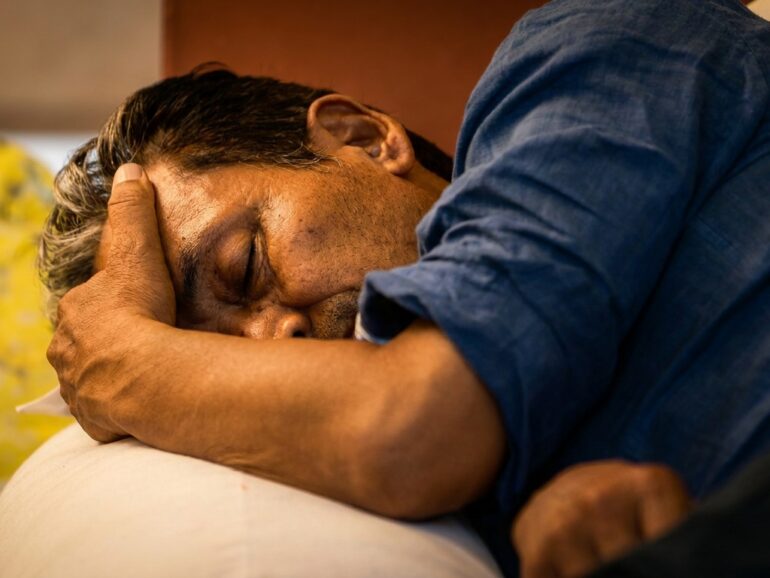
The scene at Jantar Mantar on the 18th day is hard to watch. Sonam Wangchuk, 59, lies on a white mattress under a canopy in 38-degree heat.
His blood glucose is at 67 mg/dL, critically low. He has lost 8.5 kg. When he tries to sit up, he feels dizzy. Doctors have warned of organ damage.
A student activist who was fasting alongside him, Deepak from AISA, was hospitalised with hypovolemic shock, a condition where the body doesn’t have enough blood flow to keep vital organs working.
The government of India has done nothing.
Not a single minister has visited. No back channel has been opened. No statement has come from the Prime Minister’s Office.
The Education Minister whose resignation is being demanded, Dharmendra Pradhan, has not spoken directly to the protesters.
From a safe distance, he called them “the B-team of disruptive elements” and “the B-team of terrorists.”
CJP founder Abhijeet Dipke put it bluntly: “Not a single minister or delegation has come to speak with him.”
Most coverage calls this government apathy or indifference. But that misses the point.
The silence is an active strategy. It is a calculated political response to a movement that the BJP has assessed does not threaten its power enough to warrant engagement.
Understanding why requires understanding how this government reads protest, power, and political risk.

The Anna Hazare Ghost
The single most important thing shaping the government’s response to Wangchuk is what happened at Jantar Mantar in 2011.
Anna Hazare’s 12-day anti-corruption fast at the same venue forced a reluctant UPA government to form a joint committee on the Jan Lokpal Bill. The movement received 24/7 media coverage. It drew massive crowds. It gave birth to the Aam Aadmi Party. It weakened the Congress electorally. And many argue it contributed to the UPA’s catastrophic defeat in 2014.
The BJP was the prime beneficiary of the Anna movement. It fed anti-incumbency. It split the opposition vote. It helped pave the way for Narendra Modi’s first victory.
The irony is not lost on anyone watching this protest. The party that once cheered Anna’s fast from the sidelines is now in power, facing a similar protest at the same venue, and has chosen to do the exact opposite of what the UPA did.
Every BJP strategist knows this history. Engaging with Wangchuk, in their calculation, risks creating an uncontrollable momentum.
The same kind that brought them to power. Their conclusion is simple: silence starves the movement. Give it no oxygen. Give it no legitimacy. Give it no national platform.
Dipke acknowledged this directly when asked why Wangchuk’s fast was stretching past 18 days while Anna’s lasted 12. “That was a different India,” he said. “In today’s India, human lives are not valued.”
What he did not say but is equally true: in today’s India, the government in power was the beneficiary of the last Jantar Mantar fast, and it is determined not to let history repeat itself.
The Language of Dehumanisation
Words matter, and the words the BJP has chosen for the CJP are revealing.

Pradhan called them “the B-team of disruptive elements” and “the B-team of terrorists.” BJP president Nitin Nabin described them as “virus and cockroach-like parties, trying to divide the country.”
This is not loose talk. This is a deliberate linguistic strategy.
When you call a Magsaysay awardee a “disruptive element” instead of an education reformer, his hunger strike carries less moral weight. You make it psychologically easier to ignore a dying man by first reducing him to a category unworthy of sympathy. “B-team of terrorists” is not a description. It is a legal framing. It tells the public that this is not a legitimate democratic protest but a law and order problem to be managed, not engaged.
Gandhian hunger strikes work by shaming power into response. By labelling the protesters contemptible, the government insulates itself from shame. You cannot be shamed by a cockroach.
The choice of that particular word is especially telling. The CJP adopted the name satirically, riffing on a Chief Justice’s remark about fake degrees. The government has weaponised the same word to mean something different. In their telling, these are not citizens to be heard. They are vermin to be ignored.
Why Pradhan Won’t Go
The core demand is Pradhan’s resignation. This is a non-starter for the BJP, and that reality shapes everything about the government’s response.
Conceding would mean admitting systemic failure in the education portfolio, one of the Modi government’s flagship areas.
It would mean rewarding a protest that began as a satirical Instagram movement, setting a precedent that any sufficiently persistent online campaign can force a minister’s removal.
It would invite copycat agitations targeting other ministers. And it would carry caste implications: Pradhan is an OBC face from Odisha, and his removal would affect the party’s carefully built OBC coalition.
Pradhan has doubled down. He refuses to engage. The government has calculated that losing him to a hunger strike would be more damaging than letting Wangchuk’s fast continue to its logical, potentially fatal, conclusion.
This is hardball politics stripped of sentiment. The same logic applied when the government refused to concede to the farmers’ demands for over a year.
Even when it finally repealed the farm laws, the concession was framed as a policy reversal, not capitulation to protest.
The Opposition Trap
The government’s silence puts the opposition in a double bind, and the BJP knows it.
If opposition leaders flock to Jantar Mantar, the BJP paints the protest as a political conspiracy. Pradhan’s “B-team” framing gains traction. The “genuine youth anger” narrative gets replaced by “opposition plot” headlines.
If opposition leaders stay away, the BJP accuses them of indifference to youth suffering.
The Congress gets asked why the Leader of the Opposition cares more about foreign trips than a dying activist. The movement’s supporters feel abandoned by the very parties that should champion their cause.
Either way, the opposition loses.
The Congress’s awkward positioning illustrates this perfectly. Rahul Gandhi has not visited Jantar Mantar. The party launched its own parallel campaign called ‘Chhatron Ki Goonj’ with similar demands, but has kept physical distance from the CJP protest site. Gandhi was on an extended foreign trip for most of the protest and is expected back only around July 17.
The Congress is trapped between two impulses. It wants the anti-BJP energy the CJP has generated, but it does not want to legitimise a movement that could strengthen AAP.
The party born from the 2011 Anna movement sits in direct competition with Congress in key states like Punjab and Delhi.
The government’s silence amplifies this trap. By refusing to engage, the BJP forces every opposition party to decide: do we make this protest our own, or do we let it die? Each choice carries political costs, and the government is content to watch.
The Gandhian Paradox
Wangchuk is consciously deploying Gandhian methods. Non-violence. Hunger strike. Moral pressure. Appeal to conscience. He visited Rajghat before beginning his fast. He explicitly invokes the Mahatma’s philosophy.
But the Modi government’s ideological foundation is fundamentally incompatible with Gandhian moral appeals.
This is a government that projects strength as its primary virtue. Majboot. Its ideology treats concessions to pressure as weakness. Yielding to a hunger strike would be ideologically incoherent for a government whose entire self-image rests on not yielding.
The track record confirms this. G.D. Agarwal died after an 111-day fast demanding action to clean the Ganga in 2018. The government did not respond. Fr. Stan Swamy, an 84-year-old tribal rights activist, died in custody in 2021.
There was no political fallout. When Ladakh protested non-violently in 2025, and four civilians were killed, Wangchuk was detained under the National Security Act for 170 days.
The wrestlers’ protest at Jantar Mantar in 2023, with sexual harassment allegations against a powerful figure, saw delayed engagement and no resignations. The farmers’ movement got a response only after 13 months at Delhi’s borders, only when the political cost of not conceding became too high.
The pattern is clear. This government does not respond to moral suasion. It responds to political cost. The question for Wangchuk and the CJP is whether they can create enough political pain to outweigh the cost of inaction.
Instagram Is Not TV
One critical difference between 2011 and 2026 is the media landscape.
Anna Hazare’s fast was a 24/7 television event. News channels carried it live. The front pages of every newspaper led with it. The government could not escape the story.
In 2026, the CJP has 22 million followers on Instagram. But Instagram does not set the political agenda the way television once did. Legacy media covers the protest, but not with the relentless intensity of 2011. The audience is younger, more fragmented, and easier for the government to ignore.
The BJP’s assessment appears to be that a social media storm is survivable. Sustained television outrage is not. As long as the protest remains primarily a digital phenomenon, the government can wait it out.
This has shaped their risk calculation. They believe that even if Wangchuk’s health collapses, the political fallout can be contained through managed media narratives. Frame it as a personal tragedy rather than a governmental failure. Or, in the worst case, as the predictable outcome of a stubborn activist who refused to see reason.
The July 20 Threshold
The Monsoon Session of Parliament begins on July 20. The CJP has announced a “Sansad Chalo” march to Parliament on that day.
The government’s current strategy appears calibrated around this date. If the July 20 march draws massive crowds, with national participation running into tens of thousands, they may need to recalibrate. The political cost of inaction could exceed the cost of engagement. Back channel outreach would begin.
If the march is modest, a few thousand people mostly from Delhi, the protest has peaked. Continue the silence strategy. The movement will fragment as fatigue sets in, temperatures stay high, and student protesters return to their academic calendars.
If something happens to Wangchuk before July 20, they go into crisis management mode. Control the narrative. Express concern. Send a health delegation, not a political one. Avoid any substantive concession.
The government is not unaware of the risks of a tragedy. But it has modelled those risks against historical precedent. G.D. Agarwal. Stan Swamy. The Ladakh deaths. They have concluded that the electoral cost of a hunger strike death, while real, is less than the political cost of conceding to the protest’s demands.
This is a cold calculus, but it is not irrational. The BJP has governed for 12 years. Its political survival has depended on reading these situations correctly. They believe they can absorb this protest.
A Government That Does Not Do Moral
If there is a single thread connecting the government’s response to the CJP protest, the farmers’ movement, the wrestlers’ protest, the Ladakh agitation, and every other civil society challenge of the past decade, it is this.
The Modi government does not respond to moral pressure. It responds to political power.
Every concession this government has made, the farm law repeal, the backdown on certain electoral bond provisions, the occasional course correction on policy, has come only when the political cost of not conceding became unsustainable. Not because the arguments were persuasive. Not because the protesters were right. Not because a man was dying.
Wangchuk’s hunger strike is designed to create moral pressure. But moral pressure is a currency this government does not accept.
What it does accept is political pressure. The kind that comes from coordinated, widespread, decentralised mobilisation that makes governance difficult. The farmers understood this eventually, after a year at Delhi’s borders. The question is whether the CJP and its supporters understand it now.
A Countercurrents analysis put it well: “This government retreats when the political cost of continuing becomes greater than the cost of retreating. If that is true, then our task is not merely to sit around Sonam Wangchuk’s weakening body and ask him to stop. Our task is to build the political pressure that makes his fast unnecessary.”
What Comes After the Silence
The government’s strategy carries risks. Some of them may be miscalculations.
Wangchuk is different from past protesters. Unlike G.D. Agarwal or the anonymous students who died by suicide after exam failures, he is nationally recognised. He inspired a character in 3 Idiots. He has a Ramon Magsaysay Award. He has the moral authority of 170 days in preventive detention under the NSA. His death would not be easy to spin away.
The Gen Z factor is unpredictable. The CJP’s 22 million Instagram followers represent a demographic that has not yet been politically activated at scale. If the July 20 march translates online followers into offline bodies, the equation changes. Gen Z’s political behaviour is still being written. The government may be underestimating how quickly digital anger can become street politics.
The July 20 deadline is real. If Parliament begins with the protest still unresolved, every opposition MP will raise it. The monsoon session will be disrupted. The government’s legislative agenda will be affected. What was a Jantar Mantar problem becomes a Parliament problem, and that is qualitatively different.
The government’s silence is not indifference. It is strategy, cold and calculated, based on a reading of political power that has served the BJP well for 12 years.
But strategic silence only works if the movement fails to grow. If July 20 changes that equation, the government may find that what worked against the 2011 movement looks very different against the 2026 one.
*This article will be updated as the situation develops.*